|
When The Playgrounds Were
Empty
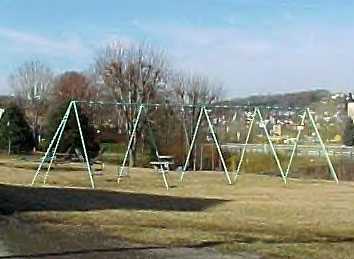
Most of the time we think of summer as being the time for picnics, baseball, swimming, and family reunions. “Summertime and the livin’ is easy,” is how George Gershwin put it in a song but sometimes the living isn’t so easy. It has been quite a few years ago, but there was a time when summertime was dreaded and brought fear and apprehension to a lot of people, and the swimming pools and playgrounds were empty. This anxiety was caused by a terrible disease known as poliomyelitis; also known as infantile paralysis or polio. It was a mysterious disease that seemingly struck at random but the majority of the cases were children. Polio had been around a long time but it hit the United States in epidemic proportions in the 1950s. It was a disease that appeared mostly in the summer months, occurring most often in August. There wasn’t a cure for polio nor was it determined exactly how it was transmitted from one person to another. I recall the summer when I was five years old and we went to the drive-in theatre. I was not allowed to play on the little playground there because other children were present. When I asked why, my Mother said, “Because you might get sick.” I only understood that I couldn’t go swing and play with other children and it made me sad. I was too small to comprehend how terrified that people really were at that time. I remember asking, “Momma, When can I play on the playground again?” Imagine the fear experienced by a parent receiving word that their child’s best friend had polio when the children had just played together the day before. Parents were frightened that their child would be next. Why some contracted the disease while others didn’t was a mystery. People became alarmed at the slightest fever or ache because polio symptoms were much like the symptoms of the flu except that polio could cripple, kill, or leave a person unable to breathe on their own. I remember seeing pictures in magazines of iron lungs (respirators), and I once saw one in use. In severe cases of polio they were used to enable the patient to breathe. The iron lung was a tube-shaped machine that enclosed the body, all but the head. A bellows pumped air in and out, causing the patient’s lungs to expand and contract. Some patients used them temporarily but patients with severe polio sometimes spent most or all of their lives on a respirator. Polio was particularly devastating for children who were too young to understand what was happening to them. The illness was usually long lasting, and not only did the children suffer extreme pain but they were isolated from their families. Imagine being a small child, suddenly taken from your home and being transported to a hospital room where no one was allowed near you without wearing gloves, masks, and gowns. Many of these children came to the hospital or treatment center from quite a distance and some came from poor families and their parents weren’t able to visit but on occasion and sometimes not at all. A woman recently told me a true story of a visit to a hospital back during that time. While visiting a young patient, her family decided to leave for a few minutes for some refreshments. They explained to the patient they were visiting that they would be back soon and were just going out for a cup of coffee. A little boy in the other bed in the room suddenly became agitated and asked, “Where do you go to get a cup of coffee?” They explained to the little boy where they planned to go but he just continued to act fearful and confused. The nurse had heard the conversation and motioned them out in the hall. It was then that the nurse explained that the little boy’s parents had told him they were going out for a cup of coffee…only they never returned. The poor child had been abandoned. Polio was a cruel disease for anyone but so very sad for children. School had to be put on hold, holidays were missed, and life changed for a long time and sometimes forever. Sister Elizabeth Kenny was a pioneer in the treatment for polio. Sister Kenny was not a Catholic sister or nun as some might think from her title. The title of Sister was a military rank for nurses in the Australian Medical Corps. She witnessed her first case of “Infantile Paralysis” in 1911 in Queensland, Australia. The disease was confirmed by a doctor there who sent word to Sister Kenny, “No known treatment…Do your best.” In that local area the six children who had the disease all recovered with her help. Sister Kenny used hot packs and physical therapy on her patients. Doctors had been using splints and immobilizing patients up until this time and it took quite awhile for Sister Kenny’s treatments to be recognized as valid. Her success could not be ignored for long and treatment centers sprung up all around that used her methods. Finally, in 1955, there was a breakthrough when the Salk vaccine was shown to be effective against polio. In 1956, Elvis Presley was pictured in the news while getting a polio vaccination to help promote immunization. I remember not long after that time, that the children in my school at Baring were bussed into the Edina school gymnasium where we children stood in line to be vaccinated against polio. Later, the vaccine was given orally and I remember eating a little pink sugar cube containing the vaccine. Polio survivors include many well-known people such as Jack Nicklaus, Alan Alda, Dinah Shore, but probably the most well known survivor would be President Franklin Delano Roosevelt. Although polio is mostly a thing of the past in the United States it still exists in some countries. More recently, it has been found that there are a number of polio survivors who are now struggling with something called Post Polio Syndrome that is now causing them health problems in their later years. The fear of the summertime ended and once again children could be seen playing freely on the playgrounds but for those who have the late effects of polio or Post Polio Syndrome, the battle is still not over. By
*Thank you to Lois Hunziker and Ida Byers for giving me the idea for this story and for relating experiences from their friends and family. Further Information: Organizations:
Polio Connection of America
March of Dimes Birth Defects
Foundation
Movie: “Sister Kenny”
(1946) Starring Rosalind Russell
|